
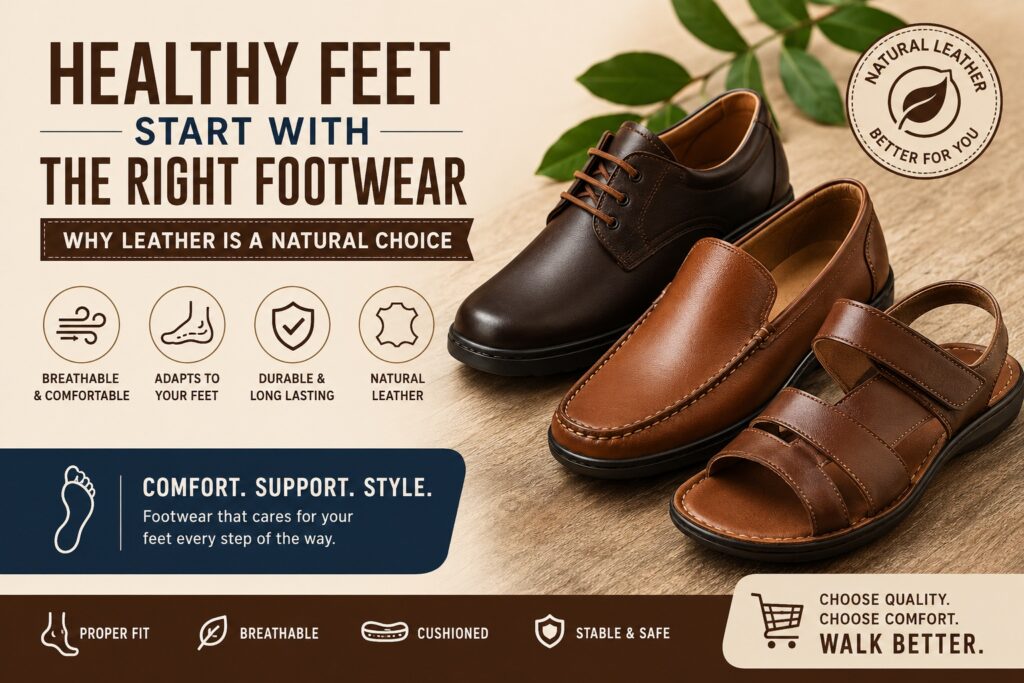
We spend hours every day on our feet, yet footwear is often chosen mainly for appearance. The materials touching your feet, the way a shoe breathes, and how well it adapts to your movement can all influence everyday comfort.
For people looking for a more natural, durable, and comfortable footwear option, well-made leather footwear can be an excellent choice.
From sandals and slippers to formal shoes and everyday casual footwear, leather has been used for generations because of its durability, flexibility, breathability, and ability to gradually adapt to the shape of the foot.
Why Footwear Material Matters
Your feet spend many hours enclosed inside footwear. Materials that trap excessive heat and moisture can make footwear uncomfortable, particularly in warm and humid climates.
Good footwear should help provide:
- Comfortable movement
- Adequate ventilation
- Proper fit
- Suitable cushioning and support
- Reduced friction against the skin
- Enough room for natural toe movement
Material is only one part of healthy footwear, but choosing the right material can make a noticeable difference in everyday comfort.
1. Leather Is Naturally Breathable
One of the biggest advantages of genuine leather is its natural breathability.
Compared with many non-breathable synthetic materials, leather can allow better movement of air and moisture through the upper. This can help create a more comfortable environment around the foot.
Breathability becomes particularly important for people who wear footwear for long periods during work, travel, shopping, or daily activities.
For hot-weather conditions, consider breathable leather sandals, open footwear, or leather shoes with suitable ventilation and moisture-managing linings.
2. Leather Gradually Adapts to Your Feet
Every person’s feet are slightly different.
Quality leather has a natural ability to soften and gradually conform to the shape of the wearer’s foot. With proper sizing and construction, this can create a comfortable, personalized feel over time.
However, a shoe should never be painfully tight when new. Leather may soften with use, but the correct size, width, and toe space should always come first.
3. Less Dependence on Plastic-Based Uppers
Many inexpensive footwear products rely heavily on synthetic upper materials. While synthetic materials have their own advantages, customers looking for more natural material options may prefer genuine leather.
Leather can be particularly attractive for customers seeking footwear that combines:
natural material + durability + comfort + timeless appearance.
When shopping online, always check the product description carefully. Terms such as leather look, synthetic leather, PU leather, and faux leather generally do not mean genuine natural leather.
4. Durability Can Make Leather a Better Long-Term Choice
Good-quality leather footwear can last for years when properly maintained.
Instead of frequently replacing low-quality footwear, investing in a durable pair can potentially reduce the number of products purchased over time.
Leather can also often be cleaned, conditioned, polished, repaired, or resoled depending on the construction of the footwear.
A well-made product that lasts longer can offer better long-term value than simply choosing the cheapest option available.
5. Comfort Depends on More Than Leather
Leather alone does not automatically make footwear healthy.
The overall design of the shoe is equally important. When choosing footwear for everyday use, look for a combination of:
- Proper sizing: The footwear should not squeeze the toes or slip excessively.
- Wide and comfortable toe area: Your toes should have enough room to move naturally.
- Flexible construction: Everyday footwear should allow comfortable movement.
- Cushioned footbed: Appropriate cushioning can improve comfort during prolonged standing and walking.
- Stable sole: The outsole should provide adequate grip and stability.
- Breathable lining: The inside of the footwear is just as important as the outside.
- Low-friction interior: Rough seams and hard edges can create uncomfortable pressure points.
- Suitable arch and heel support: Support requirements vary depending on the individual and intended use.
Think of leather as an important part of a good shoe—not a substitute for good footwear design.
6. Choose Leather According to How You Use Your Footwear
Different situations require different footwear.
Everyday Walking
Look for soft leather uppers combined with lightweight, flexible soles and comfortable cushioning.
Office & Formal Wear
Leather shoes provide a professional appearance while offering the potential for greater breathability and long-term comfort than many rigid synthetic alternatives.
Sandals & Slippers
Leather sandals can be particularly suitable for warm climates because their open construction provides ventilation. Choose designs with comfortable footbeds and secure straps.
Long Hours of Standing
Prioritize cushioning, stability, proper sizing, and support rather than choosing footwear based only on appearance.
7. What About Leather Footwear for Sensitive Feet?
People with sensitive feet should pay particular attention to fit, internal seams, pressure points, cushioning, and overall construction.
Soft leather may provide a comfortable upper material because it can gradually adapt to the foot. However, people with diabetes, neuropathy, circulation problems, existing foot wounds, or other medical foot conditions should follow footwear recommendations from their doctor or qualified foot-care professional.
No material by itself makes a shoe medically suitable.
8. How to Choose Quality Leather Footwear Online
Buying footwear online becomes easier when the product information is transparent.
Before ordering, check:
Material: Is the upper genuine leather, synthetic, or a combination?
Lining: Look for comfortable and breathable interior materials.
Sole: Check whether the sole provides the flexibility, cushioning, and grip required for your intended use.
Size Guide: Measure your feet and compare the measurement with the brand’s sizing chart instead of relying only on your usual shoe size.
Width: If available, check the width measurement as well as length.
Product Images: Examine the toe shape, heel construction, stitching, footbed, and outsole.
Return or Exchange Policy: A good fit is essential, so an easy size-exchange option is valuable when purchasing footwear online.
Natural Comfort Meets Modern Footwear
Choosing healthier footwear does not mean compromising on style.
Modern leather footwear can combine traditional natural materials with contemporary soles, cushioning systems, lightweight construction, and stylish designs.
Whether you are choosing sandals for everyday use, comfortable office shoes, casual footwear, or premium leather products, focus on fit, breathability, flexibility, support, and quality construction.
Your footwear accompanies you through thousands of steps every day. Choosing a well-designed pair made with quality materials is an investment not only in appearance, but also in everyday comfort.
Shop Smarter. Walk More Comfortably.
Explore footwear made with quality leather, comfortable footbeds, breathable construction, and thoughtfully designed soles. Choose the right size, choose the right design for your lifestyle, and give your feet the comfort they deserve.


